
How Websites Works
Before learning the web, fundamentals let's try to understand how a website works.
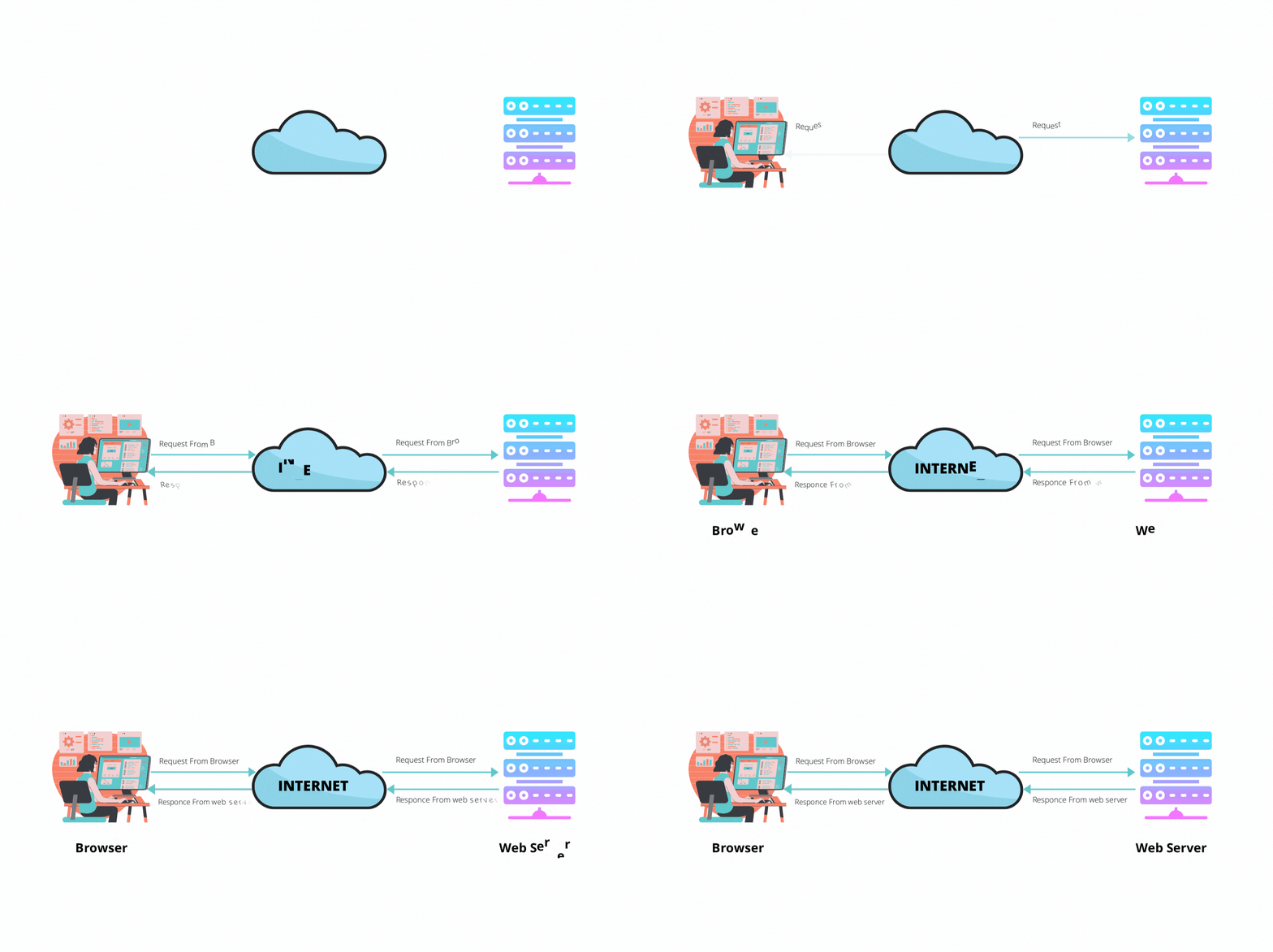
Whenever you visit a website, your browser makes a request to the webserver asking for the information about the page you're visiting and responds with data that your browser has requested and shows us the webpage.
This is just an example. There are more steps and protocols involved in this process.
A website is made up of two main components Front End and Back End.
Front End (Client-side): The Front End of a website is what you see and interact with on your browser and is also referred to as the Client-Side. It includes everything that the user experiences, like text, images, buttons, etc.
HTML, CSS JavaScript are the main languages used to make the FrontEnd part of a website.HTML is the website's skeleton, CSS is used to make the website look better, and JavaScript deals with all the functionalities. There are many other languages in which one can do Front End development.
Back End (Server-Side): The back end is the part of a website that a user cant see. It's responsible for storing data and organizing data, and ensuring everything on the client-side actually works. This is also referred to as the Server-Side. The backend communicates with the frontend, sending and receiving information to be displayed on the website.
Ruby, PHP, Java, .Net, and Python are the multiple languages used to connect with the backend. A website needs a database to store the data because it is easy to retrieve, organize, edit, and save. Many different databases are widely used, such as MySQL, SQL Server, PostgresSQL, and Oracle. It runs on a remote computer called a server.
Thanks for reading! Make sure you subscribe to the blog for more upcoming articles!
NOTE: The awesome artwork used in this article was created by @tannerwayment.