“Locking Out the Hackers: How to Defend Against Brute Force Attacks”
Brute force is a method of breaking into a password-protected system or encrypted file by attempting every possible combination of characters until the correct one is found. It is a time-consuming and often ineffective method, as the number of possible combinations increases exponentially with the length and complexity of the password.
In a brute force attack, an attacker will use a program that automatically generates and tries every possible combination of characters for a password. This can include letters, numbers, and special symbols. The program will continue to create and try combinations until the correct password is found or until the attacker gives up.
One of the most popular tools used for brute force attacks is a program called John the Ripper. This program can crack passwords on various systems, including Windows, Linux, and Mac OS X. Other popular tools include Cain and Abel, Aircrack-ng, and Brutus.
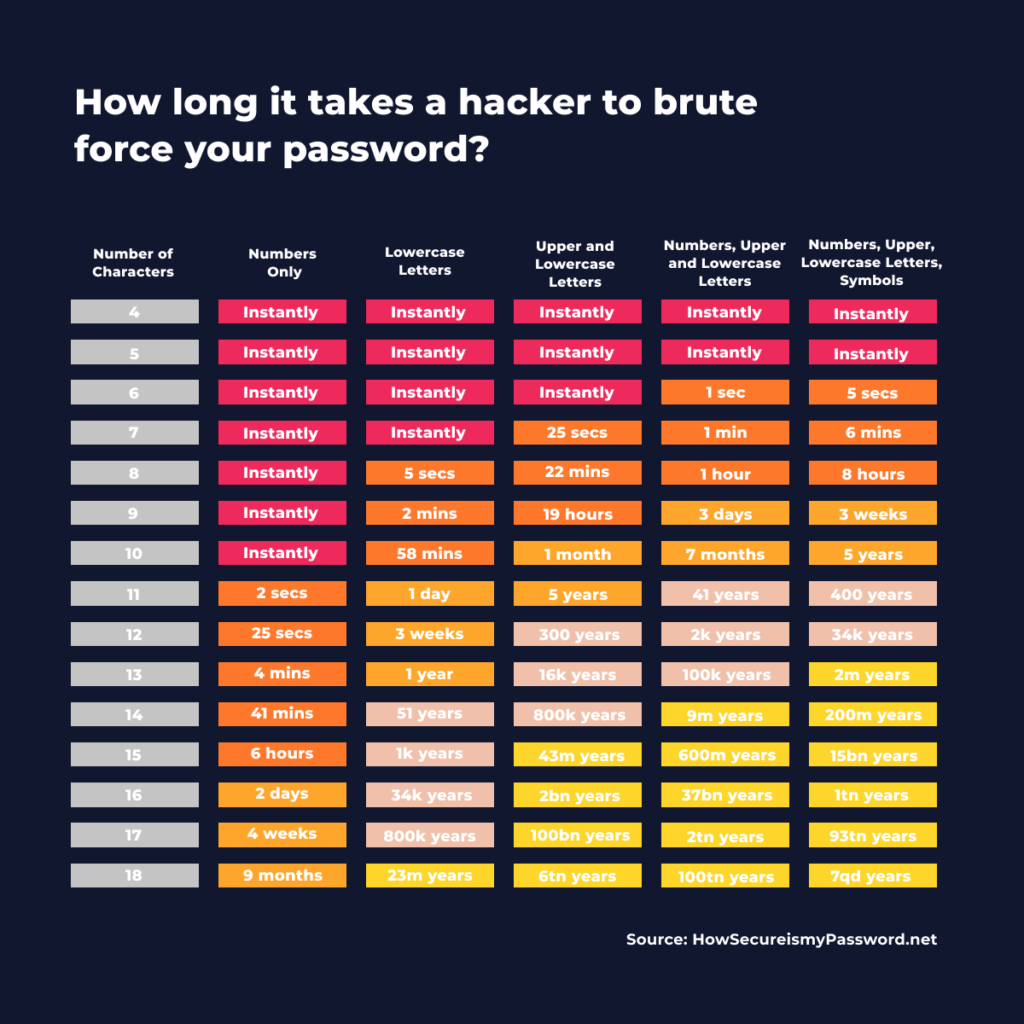
Brute force attacks can be highly effective against simple, short, or easily guessable passwords, as the number of possible combinations is relatively tiny. For example, a password only four digits long (such as “1234”) can be cracked in seconds using a brute-force attack. However, as the length and complexity of the password increases, the number of possible combinations also increases, making the attack much more time-consuming and less likely to succeed.
To protect against brute force attacks, it is essential to use strong and unique passwords for all accounts and systems. Passwords should be at least 8–12 characters long and include a combination of letters, numbers, and special symbols. It is also important to use two-factor authentication and limit the number of login attempts on your accounts. This can be done using an account lockout technique, which automatically locks a statement after a certain number of failed login attempts.
Another way to protect against brute force attacks is to use salting. Salt is a random value added to the password before it is hashed. This makes it much harder for an attacker to use precomputed tables (rainbow tables) to find the plaintext password. The salt value is stored along with the hashed password so the server can compare the input password with the hashed password + salt.
In summary, Brute force is a hacking technique that involves guessing the password by trying all possible combinations of characters. It can be highly effective against simple passwords but becomes increasingly less effective as the length and complexity of the password increases. Using strong and unique passwords, two-factor authentication, limiting login attempts, and salting to protect against brute force attacks is essential. Additionally, it’s always a good idea to stay informed and up to date with the latest security practices to ensure the safety and security of your systems and information.